Ancient wisdom, modern science
Neem: The Village Pharmacy
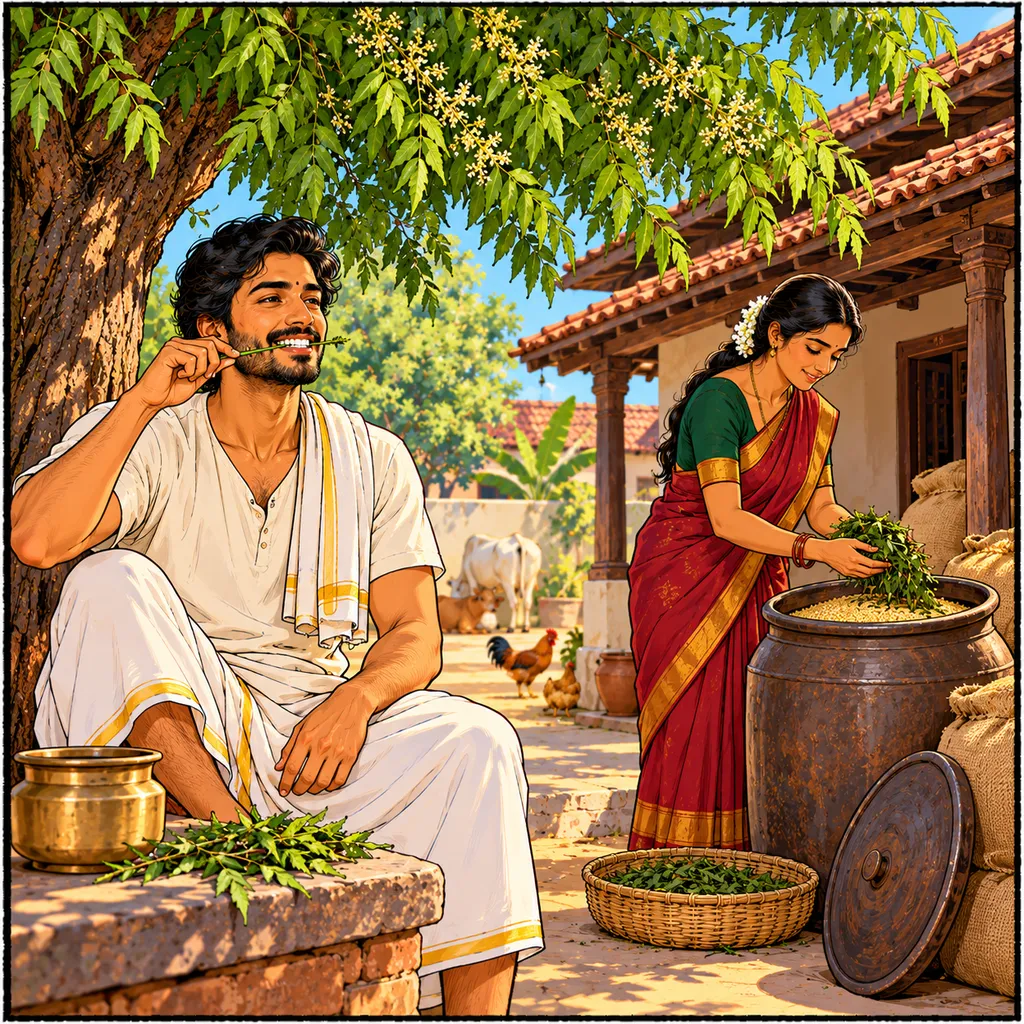
Neem is everywhere in Indian village life: people chew neem twigs (datun) to clean their teeth, eat neem flowers in the Ugadi pachadi, hang neem leaves at the door, and keep dried neem leaves in rice and grain bins.
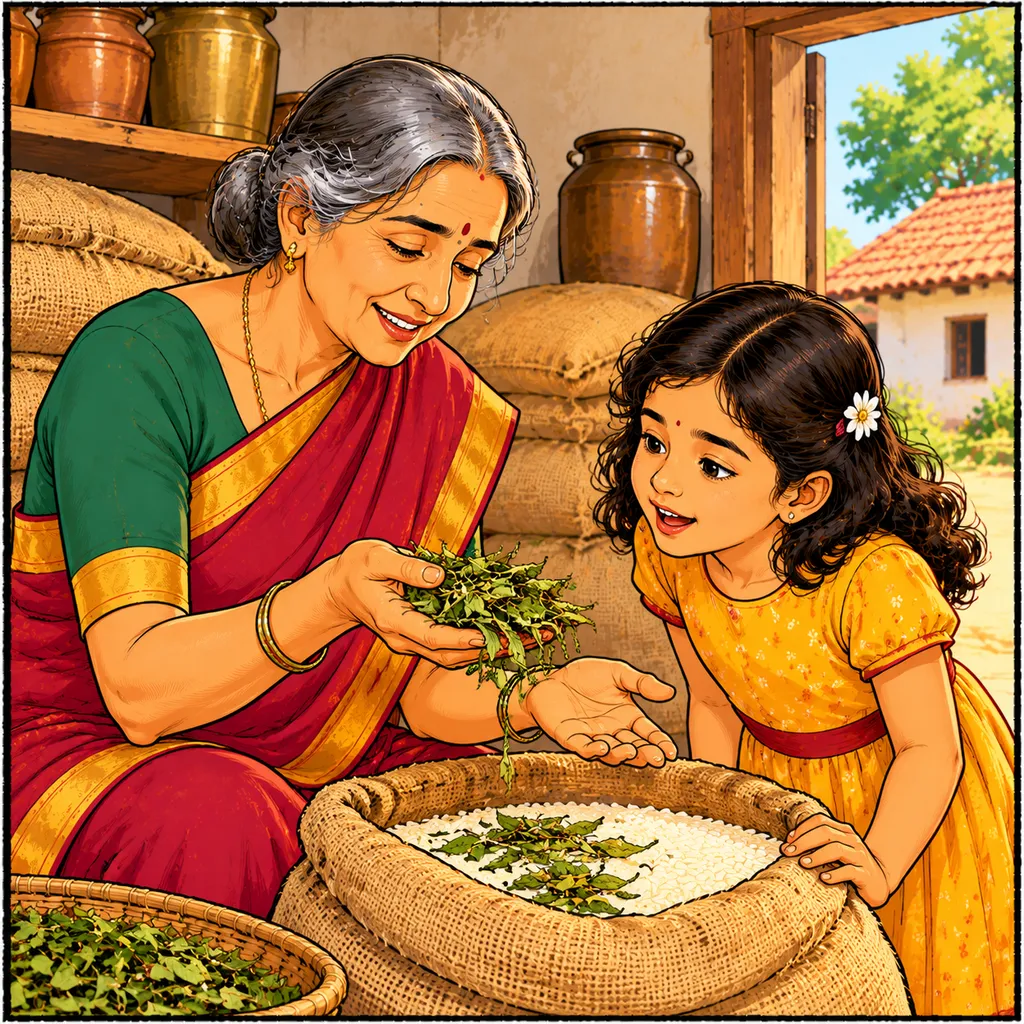
Ayurveda counts neem among its most valued plants, and families planted it near homes and temples. Grandmothers knew that grain stored with neem leaves stayed free of weevils for months.
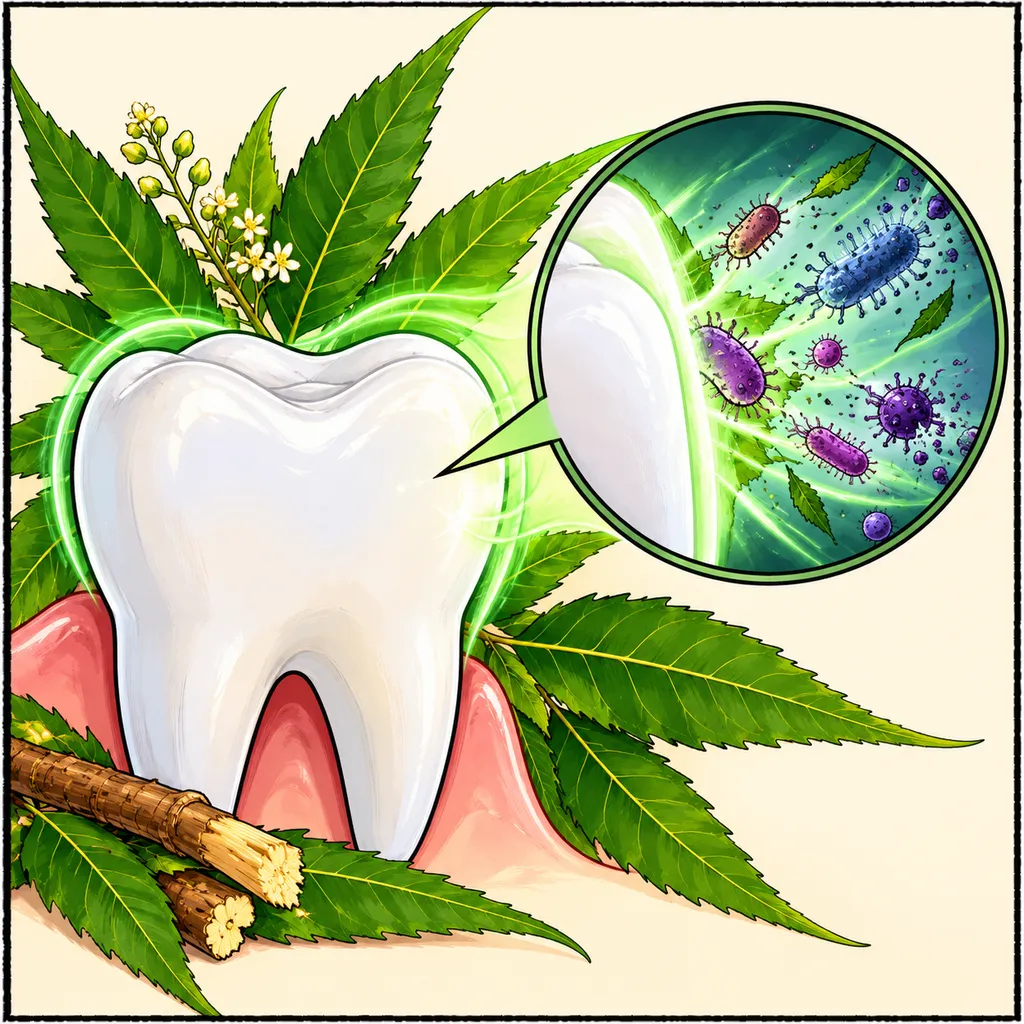
Science has found neem is full of active compounds. In laboratory tests, neem extract slows the growth of Streptococcus mutans, the main bacterium behind tooth decay, and stops plaque bacteria sticking to teeth.
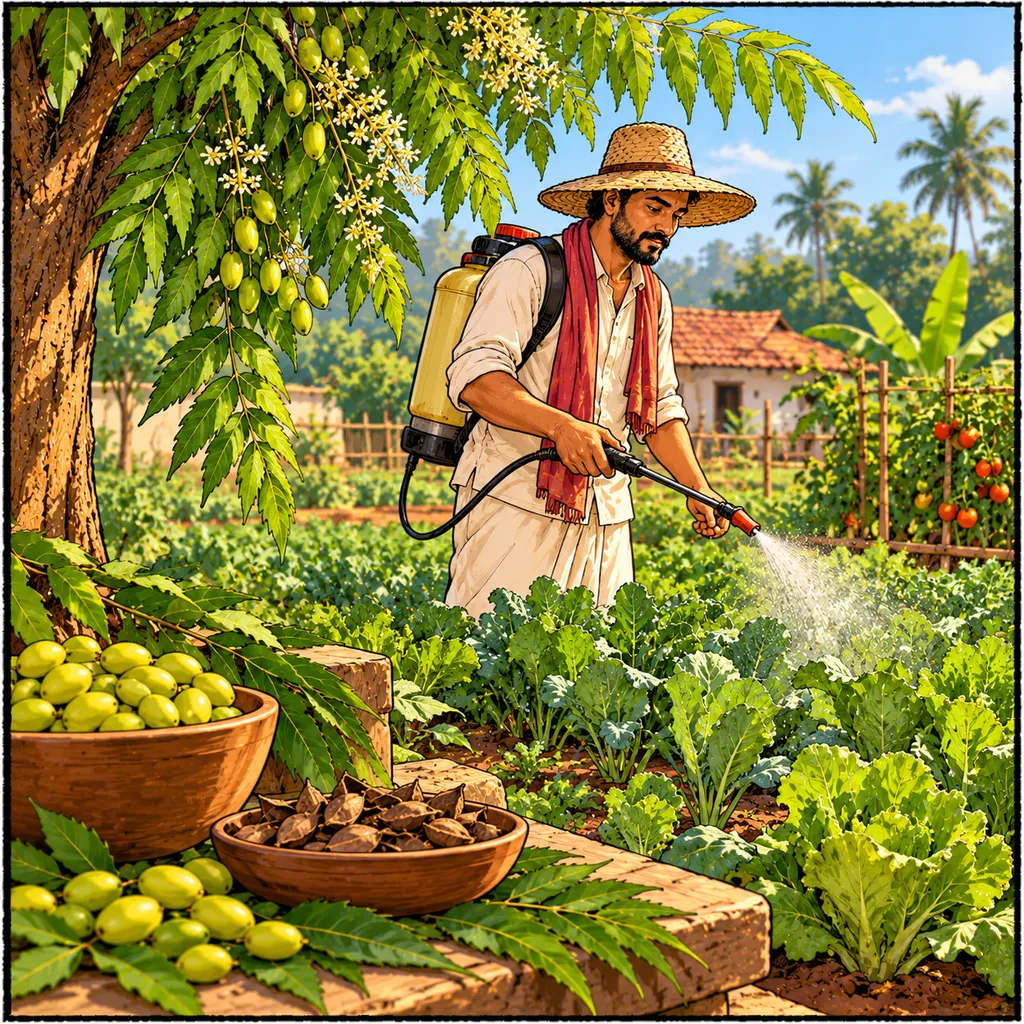
Neem seeds contain azadirachtin, which stops many insects from feeding and growing. It is now used around the world as a natural insecticide in organic farming, the same job neem leaves did in our grain bins.
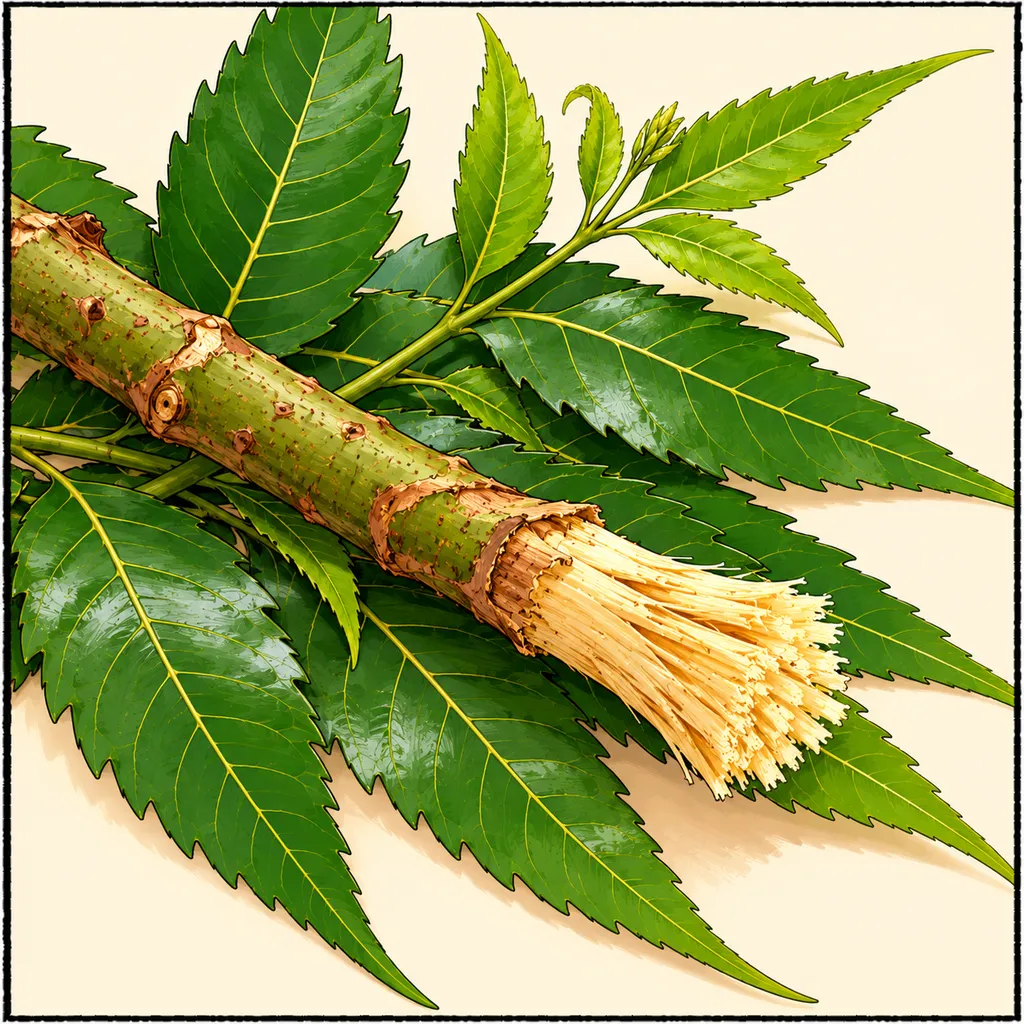
A neem datun works two ways: chewing frays the twig into a soft brush that scrubs the teeth, and the bitter juices it releases carry neem's antibacterial compounds onto the teeth and gums.

Neem shows how closely our ancestors watched nature: one tree for teeth, grain and garden. Use neem twigs and leaves as tradition did, but never swallow neem oil, which is poisonous, especially for children.
Every scientific claim here is backed by published research, listed under Sources. This is general information, not medical advice.
Frequently asked questions
Why do Indians clean their teeth with neem twigs?+
Chewing a neem twig (datun) frays it into a soft brush, and its juices contain antibacterial compounds. Laboratory studies found neem extract slows the growth of Streptococcus mutans, the main bacterium behind tooth decay.
Why keep neem leaves in rice and grain?+
Neem contains azadirachtin, which stops many insects from feeding and growing. Traditional grain stores used neem leaves against weevils, and azadirachtin is now used worldwide as a natural insecticide.
Is neem oil safe to drink?+
No. Neem oil should never be swallowed; it can be poisonous, especially for children. Neem twigs for teeth and neem leaves for stored grain are the traditional, safe uses.
Sources
- Wolinsky L. E. et al. The inhibiting effect of aqueous Azadirachta indica (Neem) extract upon bacterial properties influencing in vitro plaque formation. Journal of Dental Research, 1996; 75(2): 816-822.
- Biswas K. et al. Biological activities and medicinal properties of neem (Azadirachta indica). Current Science, 2002; 82(11): 1336-1345.
- Schmutterer H. Properties and potential of natural pesticides from the neem tree, Azadirachta indica. Annual Review of Entomology, 1990; 35: 271-297.

Planning a Tirumala visit? Get an alert when darshan for your dates opens.
Get a Telegram alert when your dates open
Popular dates for ₹300 darshan, sevas and rooms can go quickly. Register and we message you on Telegram when your dates open, and again when cancelled tickets come back.
Free to register · ₹99 per date watch · You book on the official TTD site
Don't lose your darshan to a refresh button
You plan the Tirumala trip. The ₹300 ticket is the part that slips away.
- You set an alarm, refresh the TTD site at release time, and your dates are already gone.
- The train is booked and leave is approved, but the darshan ticket isn't.
- Touts and fake sites ask far more than the official price for a 'confirmed' ticket.
₹99 + GST
₹116.82 in total per date you watch. Signing up is free.
That's about the price of a family's tea and biscuits at the station.
Compare that with a wasted trip to Tirupati, a lost day of leave, or paying a tout.
🔔 Watch my Tirumala datesFree signup · Pay only when you set a watch · Refund if no alert comes in your window
Independent service. Not affiliated with TTD. All bookings happen on the official TTD website ttdevasthanams.ap.gov.in.