Ancient wisdom, modern science
Dhyana: Meditation That Science Can Now Measure
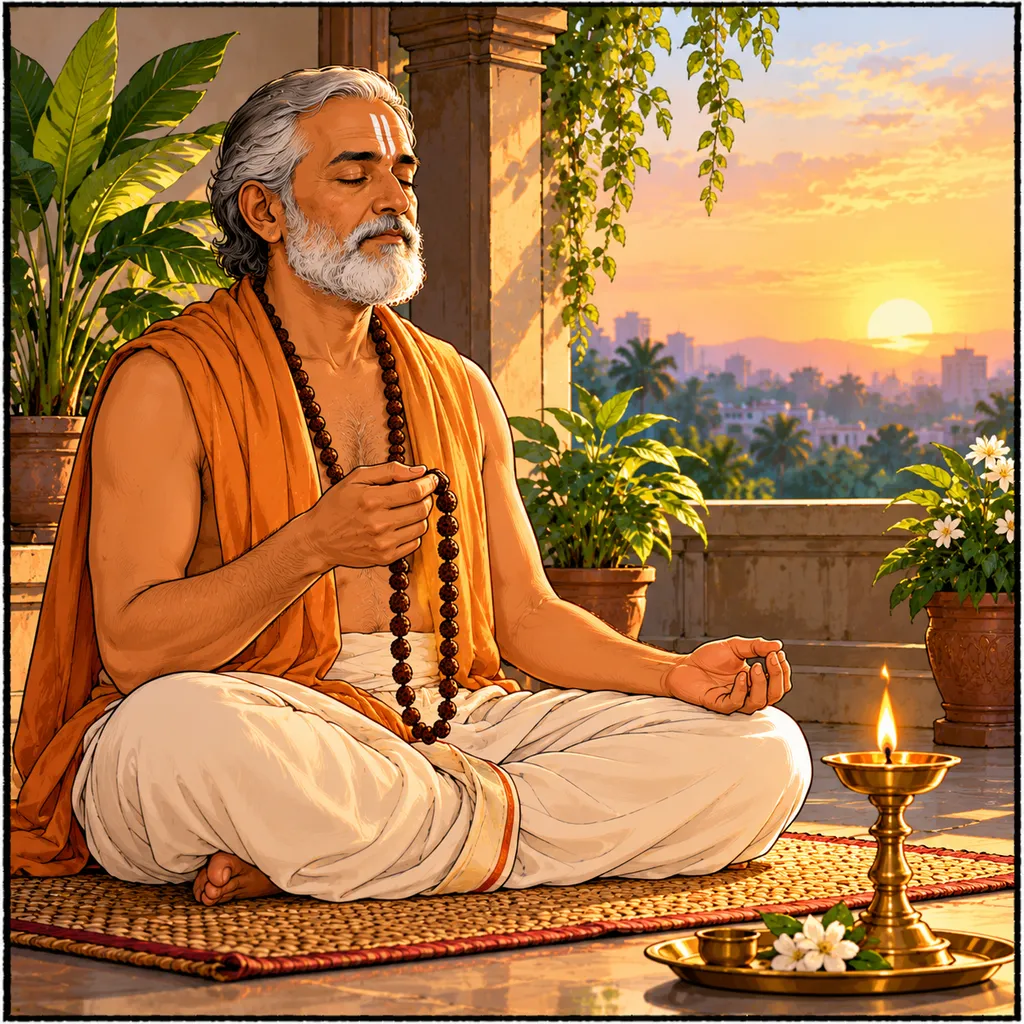
Dhyana, meditation, is the quiet heart of Hindu practice: sitting still and resting the mind on a mantra, the breath or a lamp flame. Sages meditated for years; many families still sit for a few minutes of japa every morning.
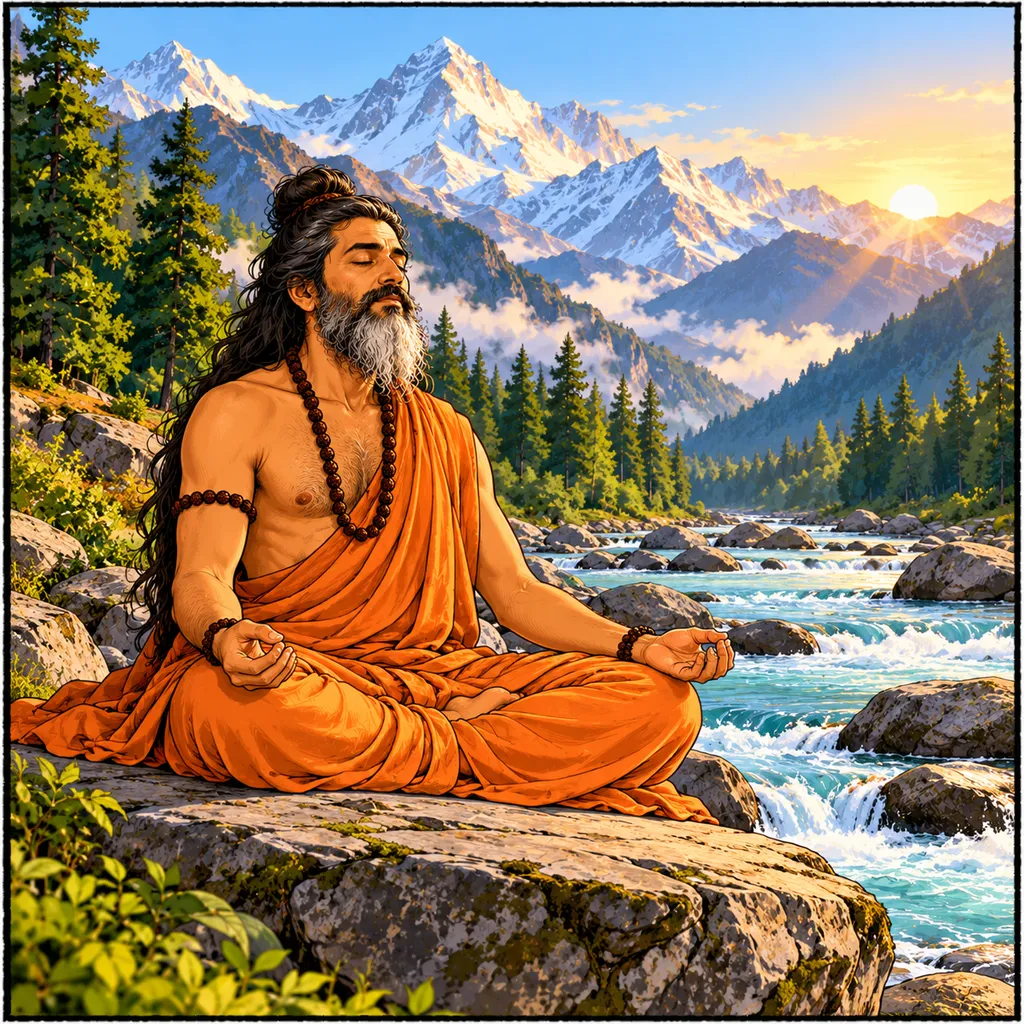
The Upanishads and the Yoga Sutras describe dhyana as training the attention: when the mind is held steady, it becomes clear and peaceful. Our ancestors treated a calm mind as something you could practise and build.
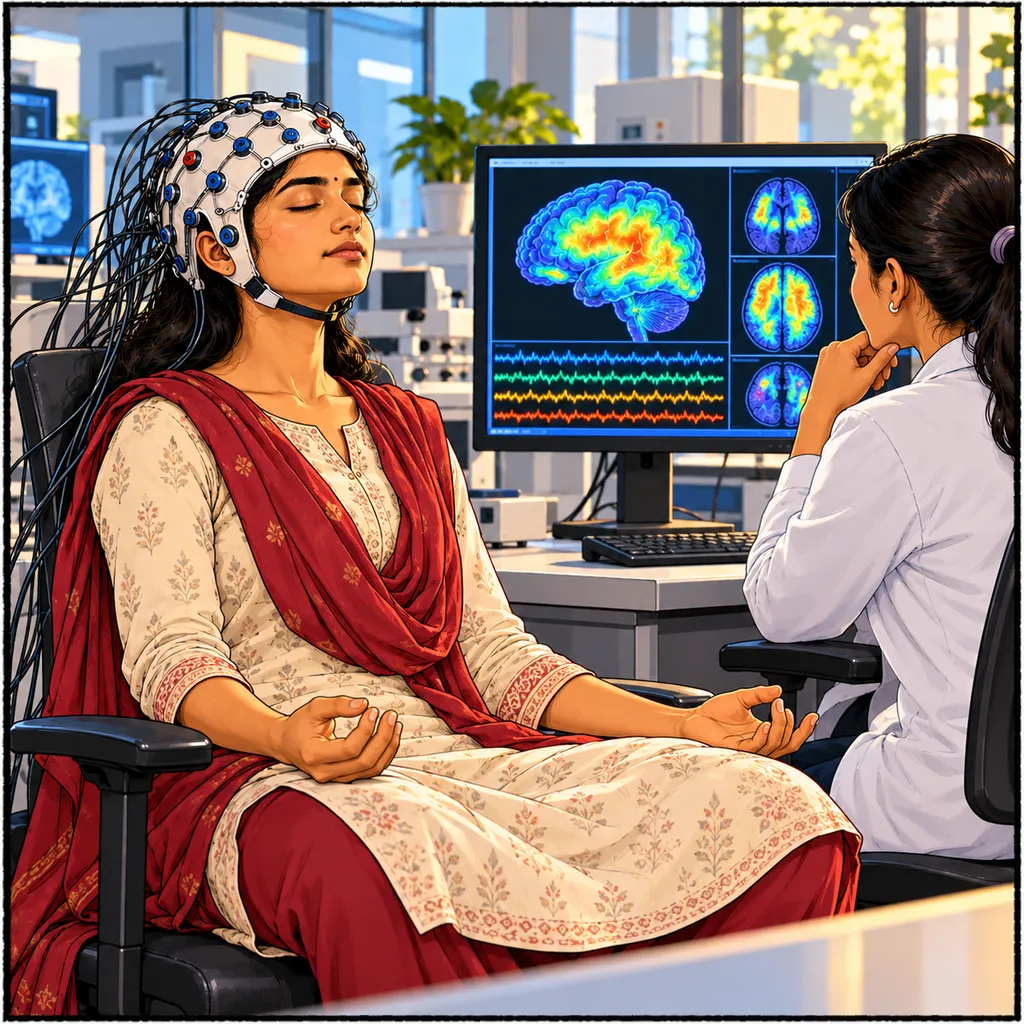
Neuroscience now studies meditation with brain scanners. A 2014 review of 47 trials in JAMA Internal Medicine found that meditation programmes helped reduce anxiety, depression and pain.
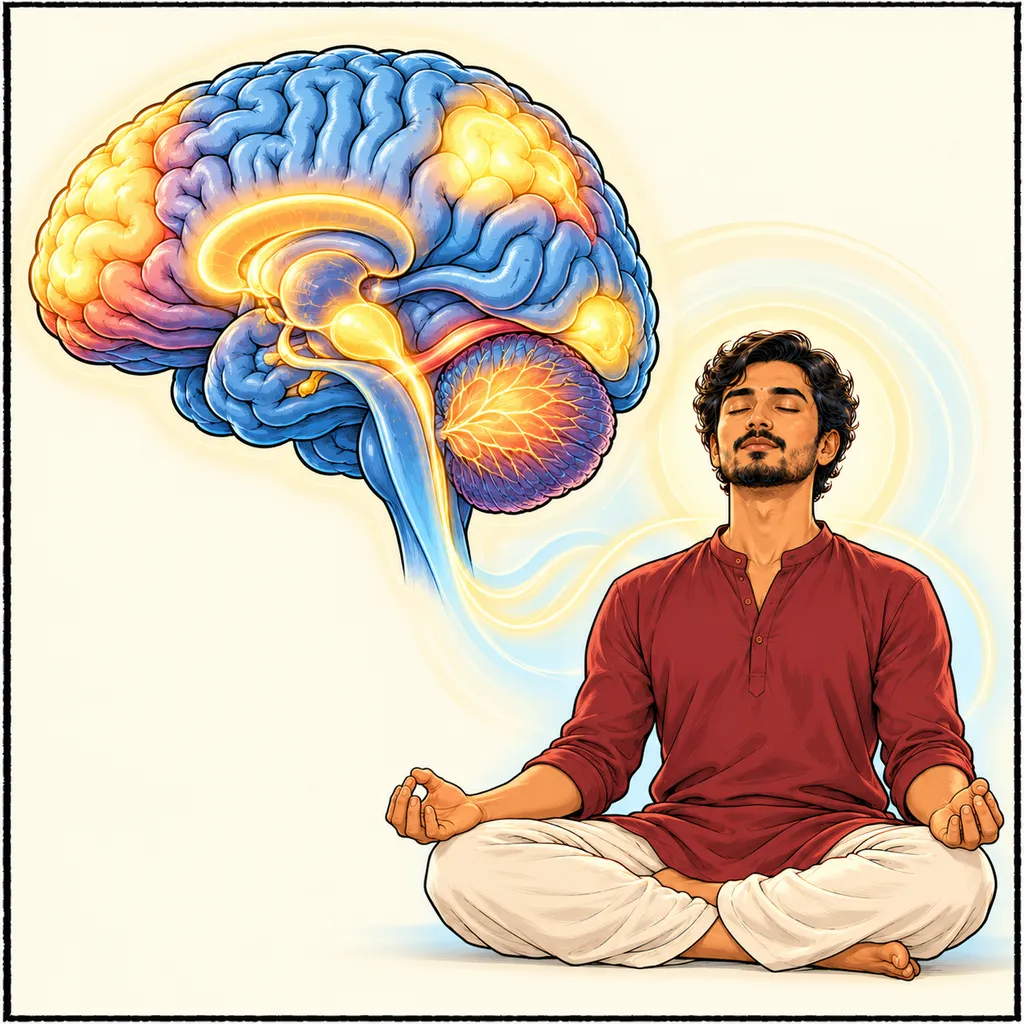
In 2005 Harvard researchers found that long-term meditators had a thicker cortex in brain areas linked to attention and awareness. A 2011 study found grey matter changes after just eight weeks of daily practice.

Meditation trains the brain's attention and calms the body's stress response. With regular practice, worries can come and go without taking over, and it becomes easier to focus.

Ten minutes of quiet sitting a day is enough to start. Meditation is a practice, not a cure: anyone with serious anxiety or depression should also see a doctor.
Every scientific claim here is backed by published research, listed under Sources. This is general information, not medical advice.
Frequently asked questions
What is dhyana?+
Dhyana is the Sanskrit word for meditation: holding the mind steadily on one object, such as a mantra, the breath or a lamp flame. It is described in the Upanishads and is one of the eight limbs of yoga in the Yoga Sutras.
What does science say about meditation?+
A 2014 review of 47 trials in JAMA Internal Medicine found that meditation programmes helped reduce anxiety, depression and pain. Brain studies have found changes in areas linked to attention and awareness.
Does meditation change the brain?+
Studies suggest it does. In 2005 Harvard researchers found a thicker cortex in attention-related areas of long-term meditators, and a 2011 study found grey matter changes after eight weeks of practice.
Sources
- Goyal M. et al. Meditation Programs for Psychological Stress and Well-being: A Systematic Review and Meta-analysis. JAMA Internal Medicine, 2014; 174(3): 357-368.
- Lazar S. W. et al. Meditation experience is associated with increased cortical thickness. NeuroReport, 2005; 16(17): 1893-1897.
- Hölzel B. K. et al. Mindfulness practice leads to increases in regional brain gray matter density. Psychiatry Research: Neuroimaging, 2011; 191(1): 36-43.

Planning a Tirumala visit? Get an alert when darshan for your dates opens.
Get a Telegram alert when your dates open
Popular dates for ₹300 darshan, sevas and rooms can go quickly. Register and we message you on Telegram when your dates open, and again when cancelled tickets come back.
Free to register · ₹99 per date watch · You book on the official TTD site
Don't lose your darshan to a refresh button
You plan the Tirumala trip. The ₹300 ticket is the part that slips away.
- You set an alarm, refresh the TTD site at release time, and your dates are already gone.
- The train is booked and leave is approved, but the darshan ticket isn't.
- Touts and fake sites ask far more than the official price for a 'confirmed' ticket.
₹99 + GST
₹116.82 in total per date you watch. Signing up is free.
That's about the price of a short auto ride to the station.
Compare that with a wasted trip to Tirupati, a lost day of leave, or paying a tout.
🔔 Watch my Tirumala datesFree signup · Pay only when you set a watch · Refund if no alert comes in your window
Independent service. Not affiliated with TTD. All bookings happen on the official TTD website ttdevasthanams.ap.gov.in.